

You Can't Make This Stuff Up - eBook - Teachers
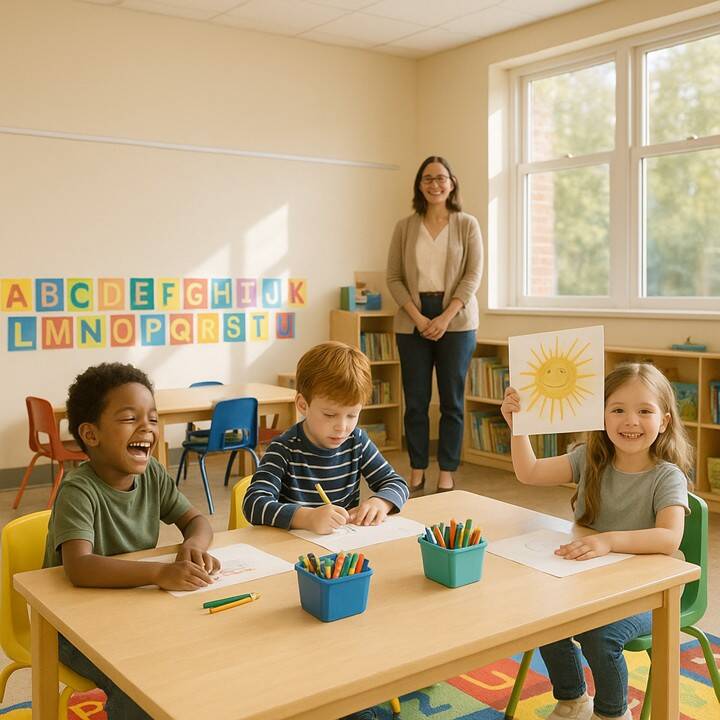
Chapter 1: The Primary Years (Grades K–2)
The Littlest Logic Master
Where shoelaces are untied, pockets are full of mystery objects, and the answer to every question might be “my cat.”
In first and second grade, everything is new and exciting — from the lunchroom rules to the discovery that glue sticks are not, in fact, ChapStick. Students are endlessly curious, occasionally sticky, and always ready to share way too much information about their pets, siblings, or digestive systems.
First and second graders live in a magical space between “I still believe in the tooth fairy” and “I have questions about how gravity works.” They’re small, unpredictable, and brutally honest in ways that could humble a stand-up comedian.
These years are adorable… and occasionally baffling.
If you ever want to see pure confidence in action, ask a kindergartner a question they don’t know the answer to.
They won’t say, “I don’t know.”
They’ll say, “Well… my dog told me…” and then launch into a three-minute explanation that is 2% fact, 98% imagination.
In these early grades, shoelaces come untied every five minutes, someone is always missing a crayon, and snacks are a higher priority than science. Logic? Optional. Enthusiasm? Unstoppable. And you’ll never hear “banana” used as a math answer more confidently anywhere else.
Chapter 3: The Middle Years (Grades 6-8)
Intro
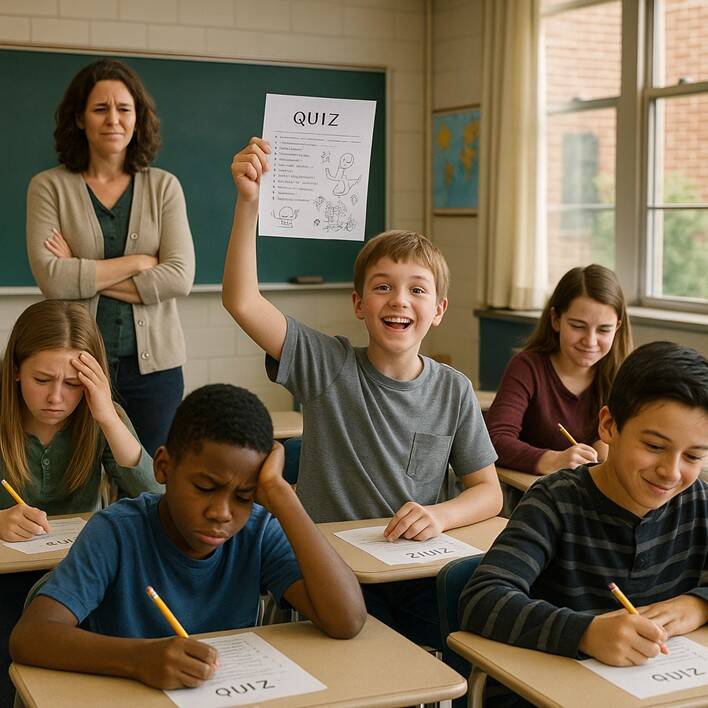
Middle schoolers dread pop quizzes. But if you want to see true creativity bloom under pressure, just watch what happens when panic meets poetry.
Story
It was Friday, and the energy level in the classroom was somewhere between “feral kittens” and “marching band warm-up.” The weekend was so close you could almost taste it, and a quiet, focused lesson was a lost cause. To bring the focus back, I announced, “Pop quiz time!” Groans echoed across the room like a broken choir. The sudden silence that followed was a rare and beautiful thing.
I handed out the short-answer sheets, which covered our recent unit on figurative language. Within minutes, the scribbling began. Most students dutifully attempted to recall the difference between similes and metaphors, their pencils moving with grim determination. But when I picked up Marcus’s paper later, I froze. The answers were less about grammar and more about existential angst.
Under question #3, Give an example of a metaphor, he had written:
My hope is a bird,
Locked out in the rain,
But at least it doesn’t have to take this quiz again.
Another student, a girl named Chloe, had a similar crisis of confidence. Her answer to Define a simile read: “A simile is like a pop quiz — nobody asked for it.” The comparison was flawless. By the end, half the class had turned their tests into tragic poems about injustice, hunger, and the cruel fate of having to write during a Friday afternoon. The assignments were filled with dramatic declarations of suffering, all in perfect rhyme and meter.
When I handed the papers back the following week, a few of the budding poets looked at me with an unspoken challenge in their eyes. Marcus, completely straight-faced, asked, “So… did I get extra credit for the rhyme scheme?”
Moral of the Story
Pop quizzes test knowledge, but in middle school, they also test creativity—and sarcasm.

Chapter 4: The High School Hustle (Grades 9–12)
Where teenagers think they’re adults, but also ask if Shakespeare was on TikTok.
High school is its own wild ecosystem. You’ve got freshmen who still get lost on the way to class, seniors who have mentally graduated in October, and sophomores who think they’ve got life figured out because they can parallel park.
They’ll give you brilliant essays one day and completely forget their own names on a test the next. They can debate politics, memorize sports stats, and build functioning robots… but also glue their fingers together in art class.
The drama is bigger, the jokes are sharper, and the moments? Unforgettable.
High schoolers balance senioritis, sarcasm, and surprisingly deep philosophical questions — often in the same conversation. They can code an app, write a five-paragraph essay in 20 minutes, and still spill a full soda in the hallway like it’s an Olympic event.
Thank you for reading—your curiosity matters. ~ Savia